Field and Track Conditions Transforming Outcome Probabilities in Soccer Leagues and Thoroughbred Racing
Erik Zimmermann · Nov 21, 2026
Field and Track Conditions Transforming Outcome Probabilities in Soccer Leagues and Thoroughbred Racing
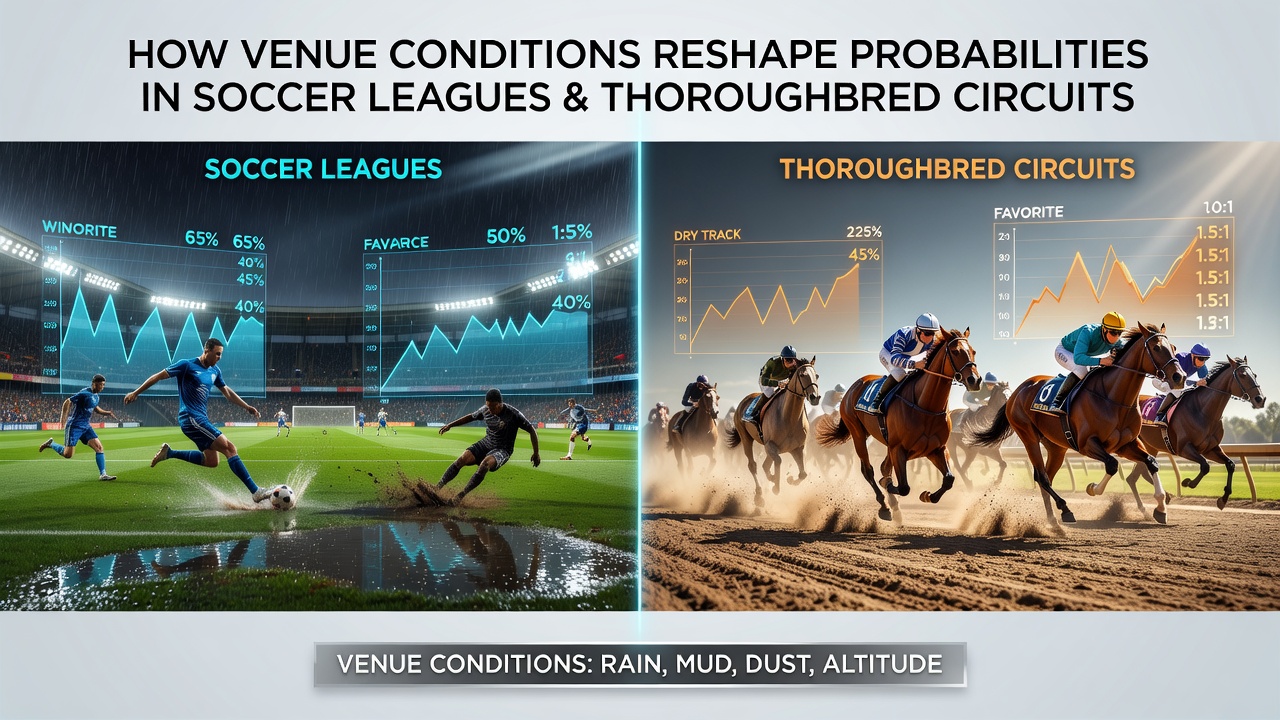
Venue conditions alter success rates across soccer leagues and thoroughbred circuits through measurable shifts in player performance, horse stamina, and equipment behavior, with data from multiple competitions confirming these patterns. Pitch quality, surface moisture, altitude, and temperature combine to change ball trajectory and player fatigue levels in soccer, while track composition, rail position, and wind exposure modify stride efficiency and finishing times in horse racing events.
Researchers tracking European soccer matches over several seasons found that longer grass lengths on pitches reduce ground ball speed by up to 15 percent, leading teams that favor short passing sequences to record lower completion rates on such surfaces. Altitude plays a documented role as well, with matches played above 2000 meters showing increased error rates in high-intensity actions because oxygen availability drops and recovery intervals lengthen between sprints.
Surface and Weather Interactions in Soccer Competitions
Moisture content on playing fields produces consistent statistical effects, according to performance databases maintained by league organizers, where wet pitches increase the frequency of long balls and reduce the accuracy of through passes that rely on precise timing. Observers note that teams adapted to drier climates encounter measurable drops in possession retention when traveling to venues with higher rainfall averages, and these adjustments appear in goal differential records across multiple campaigns.
Temperature extremes also register in injury reports and substitution patterns, with studies compiled by sports science departments indicating elevated muscle strain rates above 28 degrees Celsius that prompt coaches to rotate players earlier in matches. In November 2026, several mid-season fixtures across southern European leagues demonstrated these temperature-related shifts through higher numbers of halftime changes and altered pressing intensities.
Track Variables Affecting Thoroughbred Performance
Thoroughbred racing circuits experience comparable probability adjustments from surface type and weather, with dirt tracks yielding faster average times in dry conditions while turf courses favor horses with specific hoof structures when rainfall softens the ground. Data collected by racing authorities shows that horses with proven records on yielding turf achieve higher win percentages when track officials classify the surface as soft or heavy, whereas speed-oriented runners post lower strike rates under the same circumstances.
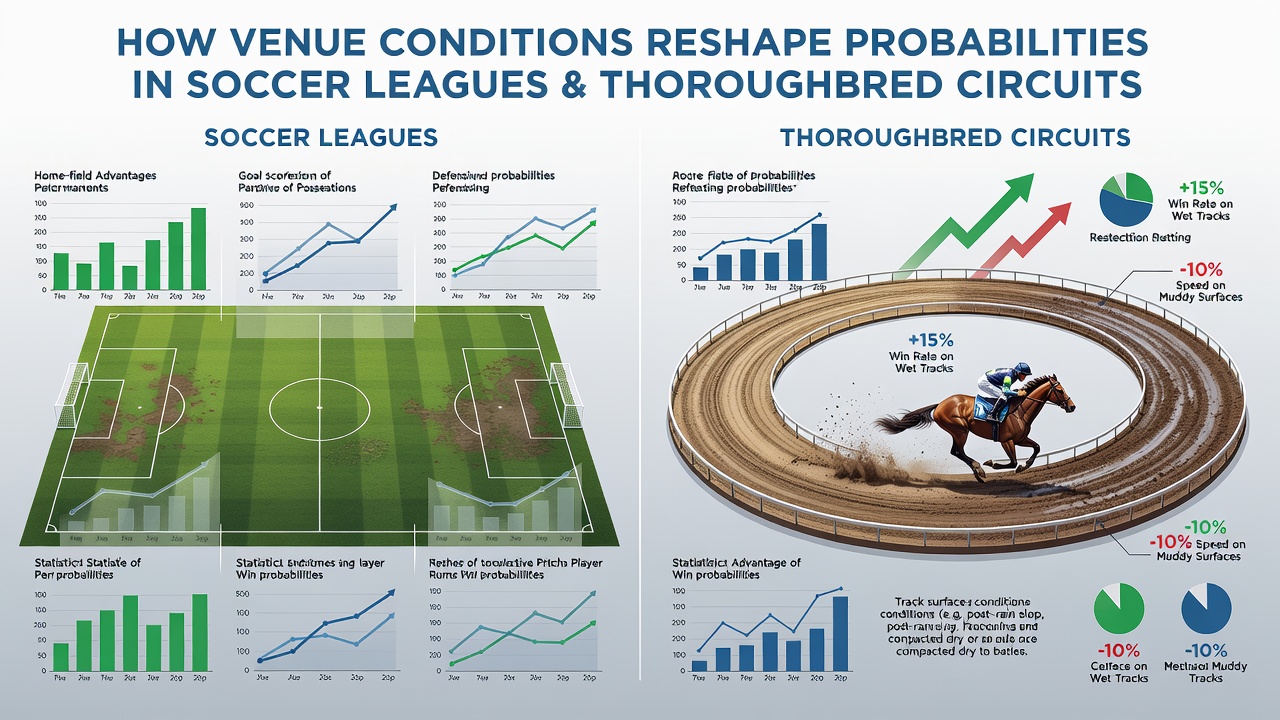
Rail position and wind direction further modify outcomes, as documented in post-race analyses from North American and Australian circuits where inside draws on tight turns correlate with improved placement statistics for horses that break quickly from the gate. Strong crosswinds have been shown to add seconds to recorded times on straight courses, and these environmental measurements appear in official result sheets that trainers and analysts review when assessing future entries.
Distance combined with track condition creates additional layers of influence, since longer races amplify the impact of surface grip and energy expenditure, leading to higher percentages of late surges on softer ground according to aggregated race data from multiple jurisdictions. One study released by the University of Melbourne equine research group examined thousands of starts and identified clear correlations between rainfall totals in the preceding 48 hours and changes in favorite success rates.
Comparative Effects Across Both Sports
Both soccer leagues and thoroughbred events demonstrate that venue-specific data improves predictive models when incorporated alongside traditional statistics, with analysts compiling historical venue records that reveal repeatable advantages for certain styles of play or running profiles. International governing bodies including FIFA technical reports and the Jockey Club performance archives publish aggregated figures that support these venue-adjusted calculations without relying on subjective interpretation.
Equipment and preparation adjustments follow directly from these conditions, as soccer squads select different footwear based on pitch reports while racing stables apply varied shoeing techniques according to track classifications released before each meeting. These preparatory decisions produce measurable differences in recorded metrics that appear consistently across seasons and locations.
Conclusion
Venue conditions therefore function as quantifiable variables that reshape probability distributions in both soccer and thoroughbred racing through documented effects on movement, endurance, and tactical execution, with available datasets confirming the need for location-specific analysis in performance evaluation. Continued collection of surface and weather metrics across global competitions provides the factual foundation for understanding these recurring patterns.